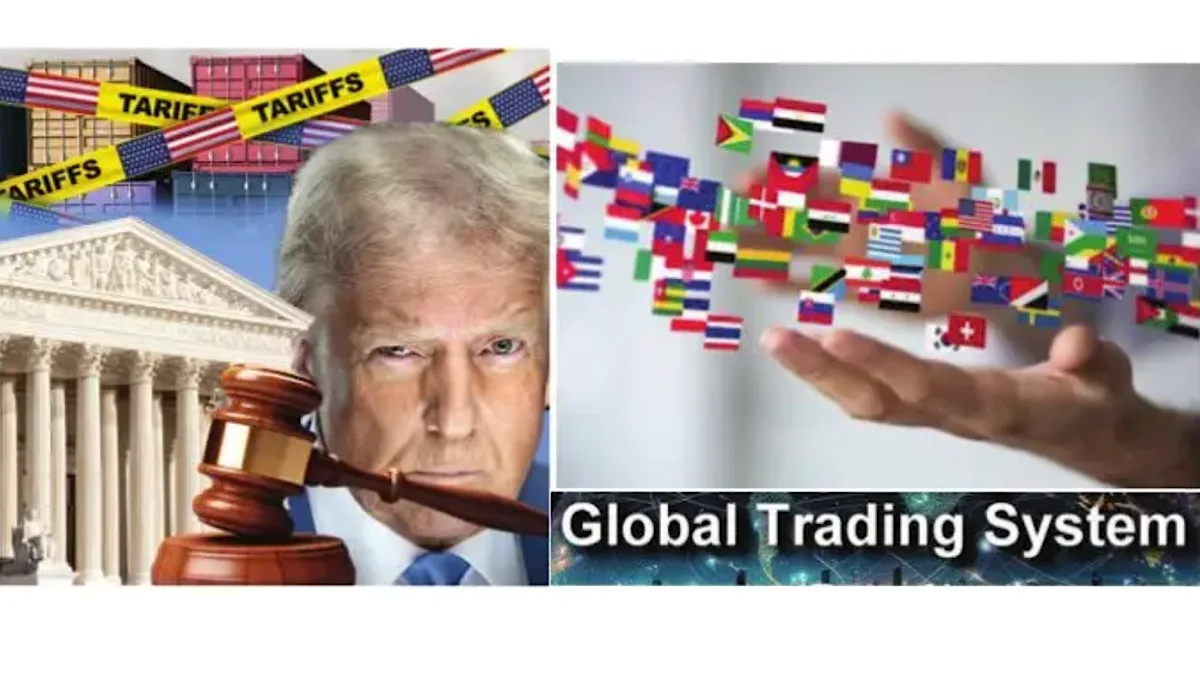
The latest round of tariff threats issued by Donald Trump once again illustrates how central protectionist trade policies have become to his economic and political strategy. Over the past few years, tariffs have been one of the most visible instruments through which the United States has attempted to reshape the global trading system. Now, after a legal setback from the Supreme Court of the United States, the Trump administration has found a new pathway to sustain that pressure.
By launching investigations into the trade practices of sixteen countries under Section 301 of the Trade Act of 1974, Washington has effectively revived the tariff threat against a wide group of trading partners, including India, China, Japan, South Korea, and Mexico. The move comes in the wake of an important legal challenge to the administration’s earlier trade measures. The Supreme Court recently struck down a set of global tariffs imposed by the Trump administration, ruling that the government had exceeded its authority in implementing them. That decision created a complicated situation for Washington. Several countries had already entered into negotiations with the United States or were in the process of finalising trade arrangements aimed at avoiding higher tariffs.
Advertisement
When the court invalidated those measures, the credibility of Washington’s tariff leverage was suddenly weakened. In response, the administration appears to have chosen a familiar strategy ~ using investigations as a prelude to potential tariffs. Section 301 of the Trade Act of 1974 has long been one of the most powerful tools available to American trade policymakers. It allows the Office of the United States Trade Representative to investigate alleged unfair trade practices by foreign governments and to impose retaliatory measures if such practices are confirmed. In the past, this instrument has been used to address issues ranging from intellectual property violations to industrial subsidies.
Under the current initiative, however, the focus appears to be on what the United States describes as “structural excess capacity” in several economies. According to American officials, many of the countries under investigation have maintained large trade surpluses with the United States, reflecting policies that allegedly favour domestic producers while disadvantaging American manufacturers. The list of countries being examined is extensive. Apart from major economic powers such as China, Japan and India, the investigation also includes economies like Vietnam, Thailand, Malaysia, Indonesia, Cambodia, Bangladesh, Singapore, Switzerland, Norway, and Taiwan.
Together, these economies represent a substantial share of global manufacturing and trade. The fact that they are being scrutinised simultaneously suggests that Washington’s concerns go beyond any single bilateral dispute. Instead, the administration appears to be addressing what it sees as a broader imbalance in the global trading system. Interestingly, one major trading partner is absent from the list ~ Canada. Given that Canada is among the United States’ largest trading partners, its exclusion has raised questions about the political and strategic considerations behind the investigations. The decision may reflect the relatively integrated nature of the North American economy and the continuing importance of regional supply chains.
It may also indicate that Washington is focusing its attention on countries with persistent trade surpluses rather than those with more balanced trade relationships. The administration has made it clear that these investigations could lead to the imposition of new tariffs by the summer of 2026. Officials have outlined a relatively swift timeline, with public comments to be submitted by April and hearings scheduled for early May. If the investigations conclude that unfair trade practices exist, tariffs could be introduced before July, when the temporary measures imposed earlier under Section 122 of the Trade Act of 1974 are set to expire. In other words, the current process appears designed not only to investigate but also to ensure that the United States retains the option of imposing tariffs without interruption.
For countries such as India, the development introduces a new layer of uncertainty into ongoing economic engagement with Washington. In recent months, New Delhi and Washington have explored the possibility of expanding bilateral trade cooperation and resolving long standing disputes over tariffs and market access. However, the renewed threat of tariffs could complicate those discussions. While the investigations do not automatically result in punitive measures, they nonetheless create an atmosphere of pressure that may influence the negotiating positions of both sides. From Washington’s perspective, the strategy is straightforward.
The Trump administration believes that previous trade arrangements allowed other countries to benefit from access to the American market while maintaining policies that protected their own industries. By using tariffs or the threat of tariffs, the administration hopes to push trading partners toward agreements that would reduce trade imbalances and open foreign markets to American goods. This objective has been repeatedly emphasised by American officials, who argue that protecting domestic manufacturing and reducing the trade deficit are essential for long-term economic stability. Yet the broader implications of this approach remain uncertain. Tariffs can sometimes provide short-term relief to domestic industries, but they also risk triggering retaliation from other countries.
In an interconnected global economy, such actions can disrupt supply chains and increase costs for businesses and consumers alike. Moreover, the perception that the United States is using tariffs primarily as a negotiating tool may erode trust among its trading partners. If countries begin to view trade agreements as temporary arrangements subject to sudden policy shifts, the stability of the global trading system could be undermined. Another dimension of the current initiative is its geopolitical context.
The announcement of the investigations comes at a time when senior American officials are expected to engage in discussions with representatives from China in Paris, potentially paving the way for a meeting between Trump and Chinese President Xi Jinping. Trade tensions have long been a defining feature of the relationship between the two countries, and any new tariffs could further complicate an already delicate diplomatic balance. At the same time, the administration’s decision to include multiple Asian economies in the investigation reflects broader concerns about manufacturing competition in the region.
Ultimately, the new investigations reveal a consistent pattern in the Trump administration’s trade policy. Rather than abandoning tariffs after the court’s ruling, Washington has simply shifted to a different legal mechanism that allows it to pursue the same objective. By invoking Section 301, the administration has effectively restored its ability to threaten tariffs while maintaining the appearance of a structured legal process. The message to trading partners is clear: negotiations with the United States will continue under the shadow of potential tariffs. Whether this strategy succeeds in reshaping global trade patterns remains to be seen. Some countries may choose to accelerate negotiations with Washington in order to avoid punitive measures. Others may resist what they perceive as unilateral pressure and seek alternative economic partnerships.
What is certain, however, is that the latest tariff initiative marks another chapter in the evolving debate over how the United States should engage with the global economy. For countries like India and many others on the investigation list, the coming months will be crucial. The outcome of the Section 301 probes could determine not only the trajectory of bilateral trade relations with the United States but also the broader stability of international trade rules. As the summer deadline approaches, governments around the world will be watching closely to see whether the investigations lead to compromise, confrontation, or yet another cycle of tariffs and counter-tariffs. In that sense, Trump’s latest tariff threat is not merely a domestic economic policy; it is a signal that the contest over the future of global trade is far from over.
(The writer is Associate Fellow, Manohar Parrikar Institute for Defence Studies and Analyses)